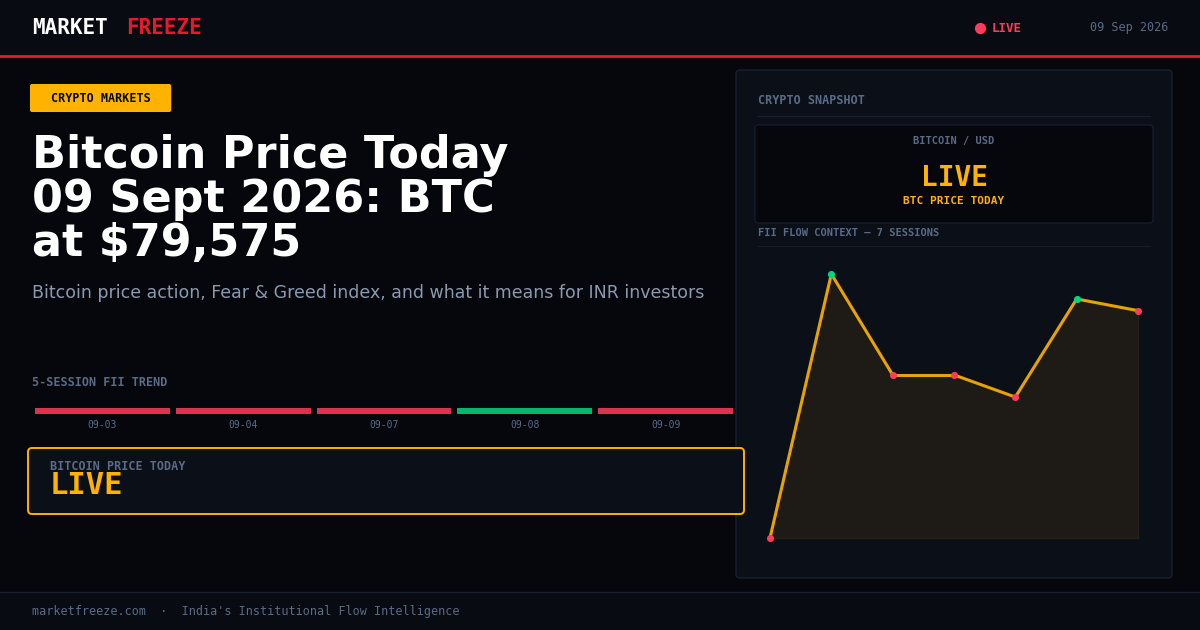
Bitcoin is trading at $79,558 USD or ₹7,545,280 INR, up 1.56% in the last 24 hours. Today’s surge in crypto prices, led by Bitcoin and Ethereum, unfolds against a backdrop of evolving regulatory scrutiny. Germany’s draft bill to tax Bitcoin like stocks, allowing tax-free gains after a 12-month holding period for existing holdings, signals a shift towards treating digital assets with more traditional financial frameworks. This move could influence how Indian investors perceive the long-term tax implications of their crypto portfolios.
Open a free demat account with
Upstox
or
Angel One
— zero brokerage on delivery trades.
Global Regulatory Shifts and Indian Investment Implications
Germany’s proposed tax treatment for Bitcoin, aligning it with stock market gains after a holding period, highlights a growing global trend towards formalizing crypto taxation. For Indian retail investors, this underscores the importance of understanding the nuances of capital gains tax on digital assets. While India has its own specific tax framework for crypto, international developments can influence policy discussions and investor sentiment. The German proposal, which differentiates between existing and future holdings, could be a talking point for policymakers globally, including in India, as they refine their approach to taxing these emerging asset classes. This proactive regulatory stance by Germany, aiming to provide clarity and potentially encourage long-term holding, is a significant development that Indian investors should monitor.
USD/INR Dynamics and Crypto Returns for Indian Investors
The current USD/INR rate stands at ₹94.84. This exchange rate is a critical factor for Indian investors holding cryptocurrencies priced in USD. For instance, Bitcoin’s price of $79,558 USD translates to ₹7,545,280 INR. A strengthening INR (falling USD/INR) would mean that the INR value of USD-denominated crypto assets decreases, even if the USD price remains stable. Conversely, a weakening INR (rising USD/INR) enhances the INR returns for Indian investors. Today, with Bitcoin and Ethereum showing positive price action in USD terms, the prevailing USD/INR rate directly impacts the absolute INR gains. For example, a 1.56% rise in Bitcoin’s USD price is amplified or muted by the USD/INR movement. Investors must consider this dual impact of crypto price appreciation and currency fluctuations when evaluating their overall portfolio performance.
Ethereum’s Performance Amidst Broader Market Movements
Ethereum is currently priced at $2,514 USD, equivalent to ₹238,427 INR, marking a 1.80% increase over the past 24 hours. The ETH/BTC ratio stands at 0.0316, indicating that Bitcoin is outperforming Ethereum today. While both major cryptocurrencies are in positive territory, the differential performance suggests a rotation or a stronger conviction in Bitcoin’s value proposition at this moment. For Indian investors, this ratio provides insight into the relative attractiveness of holding one over the other. A sustained divergence could signal shifts in institutional or retail interest, potentially influencing allocation decisions within diversified crypto portfolios. The current ratio implies that for every Bitcoin purchased, the equivalent value in Ethereum yields more Bitcoin, but the percentage gain in Bitcoin is currently higher.
Algorand’s Strategic Leadership and Institutional Adoption
Algorand’s appointment of former Chainlink executive William Herkelrath as CEO marks a significant strategic move for the blockchain organization. Herkelrath’s mandate to push Algorand into institutional finance and quantum-resistant security is particularly noteworthy. This development aligns with a broader trend of established blockchain networks seeking to bridge the gap with traditional financial institutions and enhance their security infrastructure. For Indian investors, this signifies the ongoing maturation of the crypto space, with projects actively pursuing enterprise-level adoption and robust security measures. The focus on quantum-resistant security is forward-looking, addressing potential future threats to blockchain technology. This strategic pivot by Algorand could attract institutional capital and, by extension, influence the broader altcoin market, including projects that Indian investors may be tracking.
Fear & Greed Index and Potential Market Corrections
The Crypto Fear & Greed Index currently reads 66/100, indicating a state of “Greed.” Historical context provided shows that readings above 60 have often preceded short-term market corrections of 5-15% within a 2-4 week timeframe. While periods of extreme greed, such as in 2020-2021, saw sustained highs above 75 for months, the current reading suggests a cautious approach might be warranted. For Indian retail investors, this metric serves as a valuable sentiment indicator. A persistently high “Greed” reading can signal that the market may be overheated, increasing the probability of a pullback. It doesn’t necessarily predict an immediate crash, but it highlights a heightened risk of a near-term correction. Investors should consider rebalancing or taking partial profits if their portfolios have seen significant gains, especially given the recent positive price action.
FII Flows and Their Correlation with Indian Equities
On September 9, 2026, Foreign Institutional Investors (FIIs) were net sellers to the tune of ₹123.19 Cr in Indian equities. This contrasts with earlier sessions where FIIs were significant net sellers. Domestic Institutional Investors (DIIs), however, continued their buying spree, with net purchases of ₹1,349.64 Cr. The Nifty closed at 23,431.50. The FII outflow, though modest compared to previous days, indicates continued caution from foreign institutions regarding Indian equities. While there isn’t a direct, immediate correlation between FII equity flows and crypto markets, shifts in FII sentiment can impact overall risk appetite in financial markets. When FIIs are net sellers in equities, it can sometimes translate to a broader risk-off sentiment that might also affect speculative assets like cryptocurrencies. However, DII buying has been strong enough to partially offset FII selling, providing some support to the Indian equity market.
Crypto Tax Mechanics: A Hypothetical Scenario
Let’s consider a hypothetical scenario for an Indian investor. Suppose an investor purchased 0.1 BTC at an average price of $70,000 USD (approximately ₹6,650,000 INR at a USD/INR of 95) a few months ago. Today, that 0.1 BTC is valued at $79,558 USD (₹7,545,280 INR). If this investor decides to sell this holding today, they would realize a capital gain. The total gain in INR would be ₹7,545,280 INR – ₹6,650,000 INR = ₹895,280 INR. This gain would be subject to India’s crypto tax regulations, which typically involve a 30% tax on gains and a 1% TDS on transactions above certain thresholds. This example illustrates the importance of tracking purchase prices and understanding the tax implications of any potential sale, especially with Bitcoin trading at such elevated levels.
Key Levels to Watch
Given the current FII selling trend and a slight pullback in Nifty, key levels to watch are as follows:
- Nifty Support: The immediate support for the Nifty is likely around the 23,300 and 23,000 levels. A breach below these could signal further downside pressure, potentially influenced by sustained FII outflows.
- Nifty Resistance: The resistance remains at the recent highs, with 23,500 and 23,700 being crucial psychological and technical barriers. Breaking these levels convincingly would require renewed buying interest, possibly from FIIs or stronger domestic momentum.
- USD/INR: The ₹95.00 mark in USD/INR is a significant psychological level. A sustained move above this could add pressure on Indian markets and potentially increase the INR value of foreign investments.
Frequently Asked Questions
Q: What did FII buy or sell on 2026-09-08?
A: FII were net buyers of +₹280.13 Cr on 2026-09-08.
Q: What did DII buy on 2026-09-09?
A: DII were net buyers of +₹1,349.64 Cr on 2026-09-09.
Q: Is FII buying or selling in September 2026?
A: In September 2026, FII have predominantly been net sellers, with significant outflows observed on most trading days, though a small net buying position was recorded on September 8th.
The 30% tax on Virtual Digital Assets (VDAs) in India, coupled with a 1% Tax Deducted at Source (TDS) on crypto transactions exceeding specified limits, remains a crucial consideration for Indian investors. This tax structure applies regardless of whether the investor is holding the asset for short-term trading or long-term investment, unlike traditional securities which have different capital gains tax rates for short-term and long-term holding periods. For instance, if an Indian investor sells 0.5 ETH currently valued at $2,514 USD (₹238,427 INR) per ETH, and their purchase price was significantly lower, the entire profit would be subject to the 30% VDA tax. Furthermore, if the transaction value exceeds the TDS threshold, an additional 1% TDS would be deducted at the source, which can later be claimed as a credit against the total tax liability. This dual tax mechanism underscores the importance of meticulous record-keeping and understanding the tax implications before executing any trade.
Actionable Framework: Navigating Current Market Conditions
For Indian investors looking to navigate the current market sentiment, characterized by a “Greed” index reading of 66/100 and mixed FII flows, a structured approach can be beneficial. Here’s a potential framework:
- Bitcoin (BTC) Levels:
- Support: Watch the $77,000 – $78,000 USD (approx. ₹7,300,000 – ₹7,400,000 INR) range. A dip to these levels could present a buying opportunity for those with a long-term conviction, especially if the broader market sentiment remains cautiously optimistic.
- Resistance: The $80,000 – $81,000 USD (approx. ₹7,550,000 – ₹7,650,000 INR) zone is a key psychological and technical barrier. A decisive break above this could signal continuation of the upward trend.
- Ethereum (ETH) Levels:
- Support: Monitor the $2,450 – $2,500 USD (approx. ₹232,000 – ₹237,000 INR) area. Holding above this support is crucial for maintaining positive momentum.
- Resistance: The $2,550 – $2,600 USD (approx. ₹242,000 – ₹247,000 INR) zone represents the immediate resistance. A sustained move above this could pave the way for further price appreciation.
- Risk Management:
- Portfolio Rebalancing: Given the “Greed” sentiment, consider rebalancing portfolios that have seen significant gains. Taking partial profits on highly appreciated assets and reallocating to more stable investments or holding stablecoins could mitigate potential downside risk.
- Dollar-Cost Averaging (DCA): For long-term investors, continuing a DCA strategy, especially during minor pullbacks, can help average out the purchase cost and reduce the impact of volatility.
Bottom Line
Today’s crypto rally, with Bitcoin at $79,558 USD (₹7,545,280 INR) and Ethereum at $2,514 USD (₹238,427 INR), occurs amidst a mixed FII flow in Indian equities. The “Greed” reading on the Fear & Greed Index at 66/100 suggests potential for a short-term correction, a factor Indian investors should consider. International regulatory developments, such as Germany’s proposed Bitcoin tax policies, highlight the evolving landscape of digital asset taxation globally. Investors must remain mindful of both crypto price action and currency dynamics (USD/INR at ₹94.84) when assessing their portfolio’s performance in INR terms.
Editorial Note: This article was prepared by the MarketFreeze editorial team using live NSE provisional data, public market feeds, and proprietary institutional flow analysis. All price and flow figures are sourced directly from NSE, BSE, and CoinGecko as of 09 September 2026. This content is for informational purposes only and does not constitute investment advice. MarketFreeze is not SEBI-registered. Please consult a qualified financial advisor before making investment decisions. Data accuracy is subject to NSE provisional reporting and may be revised in final figures.