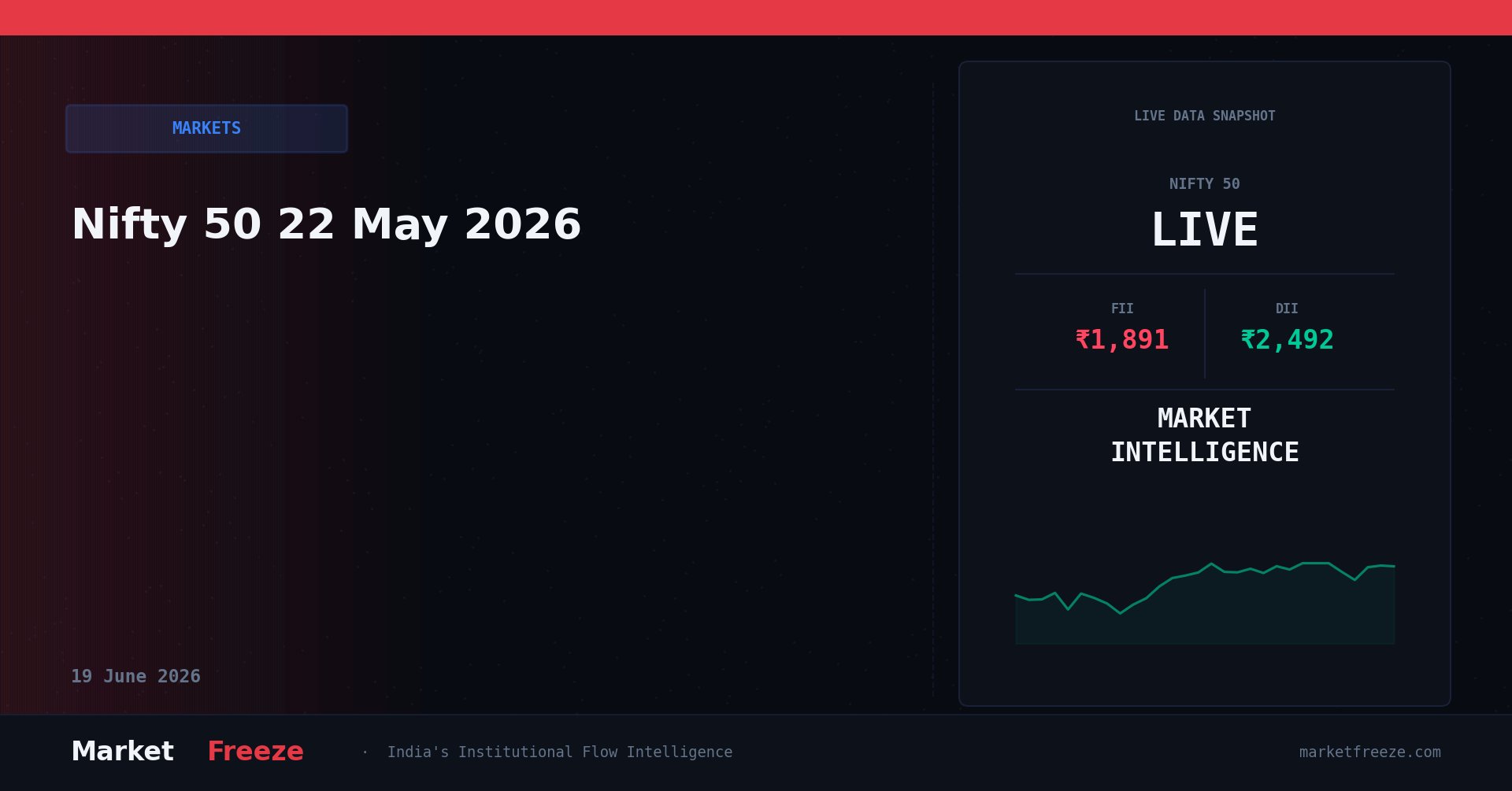
As the Indian stock market continues to attract attention from global investors, the Indian Markets in Focus story is gaining traction, with the NSE and BSE witnessing significant activity in recent days. The Nifty 50 and Sensex have been volatile, with investors closely watching the developments in the equity market India. The Indian stock market has been a hotbed of activity, with foreign institutional investors (FIIs) and domestic institutional investors (DIIs) playing a crucial role in shaping the market trends. In this context, it is essential to analyze the current market scenario and its implications for investors.
Opening analysis — what this story means for Nifty/Sensex investors TODAY
The current market trends suggest that the Nifty 50 and Sensex are likely to remain volatile in the short term, with investors closely watching the global economic developments and their impact on the Indian stock market. The Indian Markets in Focus story is expected to have a significant impact on the market, with investors likely to remain cautious in the near term. The BSE and NSE are expected to witness significant activity, with investors closely watching the developments in the equity market India. The Nifty 50 and Sensex are likely to remain range-bound, with investors looking for cues from the global markets and the Indian economy.
Sectoral impact — which NSE sectors are most affected and why
The Indian Markets in Focus story is likely to have a significant impact on various sectors in the NSE, with some sectors likely to be more affected than others. The banking sector is likely to be one of the most affected sectors, with investors closely watching the developments in the Indian banking system. The IT sector is also likely to be impacted, with the Indian IT companies facing significant competition from global players. The pharmaceutical sector is another sector that is likely to be affected, with the Indian pharmaceutical companies facing significant challenges in the global market. The automobile sector is also likely to be impacted, with the Indian automobile companies facing significant competition from global players.
FII/DII angle — how institutional players likely respond to this news
The FII/DII angle is crucial in understanding the market trends, with foreign institutional investors and domestic institutional investors playing a significant role in shaping the market. The FIIs are likely to remain cautious in the near term, with investors closely watching the global economic developments and their impact on the Indian stock market. The DIIs are likely to be more aggressive, with investors looking to capitalize on the opportunities in the Indian market. The FII/DII flows are likely to be significant, with investors closely watching the developments in the equity market India. The NSE and BSE are expected to witness significant activity, with investors closely watching the developments in the Indian stock market.
What retail investors should watch — specific levels, triggers, timelines
Retail investors should closely watch the Nifty 50 and Sensex levels, with the 10500-11000 range likely to be crucial for the Nifty 50. The 35000-36000 range is likely to be crucial for the Sensex. Retail investors should also watch the FII/DII flows, with significant flows likely to impact the market trends. The economic data is also crucial, with retail investors closely watching the developments in the Indian economy. The global market trends are also significant, with retail investors closely watching the developments in the global markets.
📊 Track institutional flows like FII/DII daily — and act on them with zero brokerage.
Historical context — similar events and market outcomes
The Indian Markets in Focus story is not new, with similar events having occurred in the past. The 2008 global financial crisis is a significant example, with the Indian stock market having witnessed significant volatility during that period. The Nifty 50 had fallen to 2500 levels, while the Sensex had fallen to 8000 levels. However, the market had recovered subsequently, with the Nifty 50 and Sensex reaching new highs. The 2013 taper tantrum is another example, with the Indian stock market having witnessed significant volatility during that period. The Nifty 50 had fallen to 5500 levels, while the Sensex had fallen to 18000 levels. However, the market had recovered subsequently, with the Nifty 50 and Sensex reaching new highs. The 2020 COVID-19 pandemic is a recent example, with the Indian stock market having witnessed significant volatility during that period. The Nifty 50 had fallen to 7500 levels, while the Sensex had fallen to 25000 levels. However, the market had recovered subsequently, with the Nifty 50 and Sensex reaching new highs.
The Indian stock market has a history of witnessing significant volatility, with the Nifty 50 and Sensex having fallen significantly during periods of global economic uncertainty. However, the market has always recovered subsequently, with the Nifty 50 and Sensex reaching new highs. The equity market India is expected to continue to be volatile, with investors closely watching the developments in the global markets and the Indian economy.
In conclusion, the Indian Markets in Focus story is significant, with the Nifty 50 and Sensex likely to remain volatile in the short term. The FII/DII angle is crucial, with foreign institutional investors and domestic institutional investors playing a significant role in shaping the market trends. Retail investors should closely watch the Nifty 50 and Sensex levels, with the 10500-11000 range likely to be crucial for the Nifty 50. The 35000-36000 range is likely to be crucial for the Sensex. The economic data is also crucial, with retail investors closely watching the developments in the Indian economy. The global market trends are also significant, with retail investors closely watching the developments in the global markets.
The Indian stock market is expected to continue to be volatile, with investors closely watching the developments in the global markets and the Indian economy. The Nifty 50 and Sensex are likely to remain range-bound, with investors looking for cues from the global markets and the Indian economy. The equity market India is expected to continue to attract attention from global investors, with the NSE and BSE witnessing significant activity.
The banking sector is likely to be one of the most affected sectors, with investors closely watching the developments in the Indian banking system. The IT sector is also likely to be impacted, with the Indian IT companies facing significant competition from global players. The pharmaceutical sector is another sector that is likely to be affected, with the Indian pharmaceutical companies facing significant challenges in the global market. The automobile sector is also likely to be impacted, with the Indian automobile companies facing significant competition from global players.
In order to navigate the volatile market, retail investors should consider the following strategies:
- Diversification: Spread investments across different asset classes and sectors to minimize risk.
- Dollar-cost averaging: Invest a fixed amount of money at regular intervals, regardless of the market’s performance.
- Stop-loss: Set a stop-loss limit to limit potential losses if the market moves against the investor.
- Long-term perspective: Focus on long-term growth rather than short-term gains.
Additionally, retail investors should stay informed about the latest market trends and developments. This can be achieved by:
- Following reputable financial news sources.
- Analyzing financial data and reports.
- Consulting with financial advisors or experts.
📬 Get FII/DII Data Every Morning — Free
Join thousands of Indian traders who start their day with MarketFreeze. Daily FII/DII flow, Nifty outlook, and crypto — delivered by 8 AM IST.